
In this article
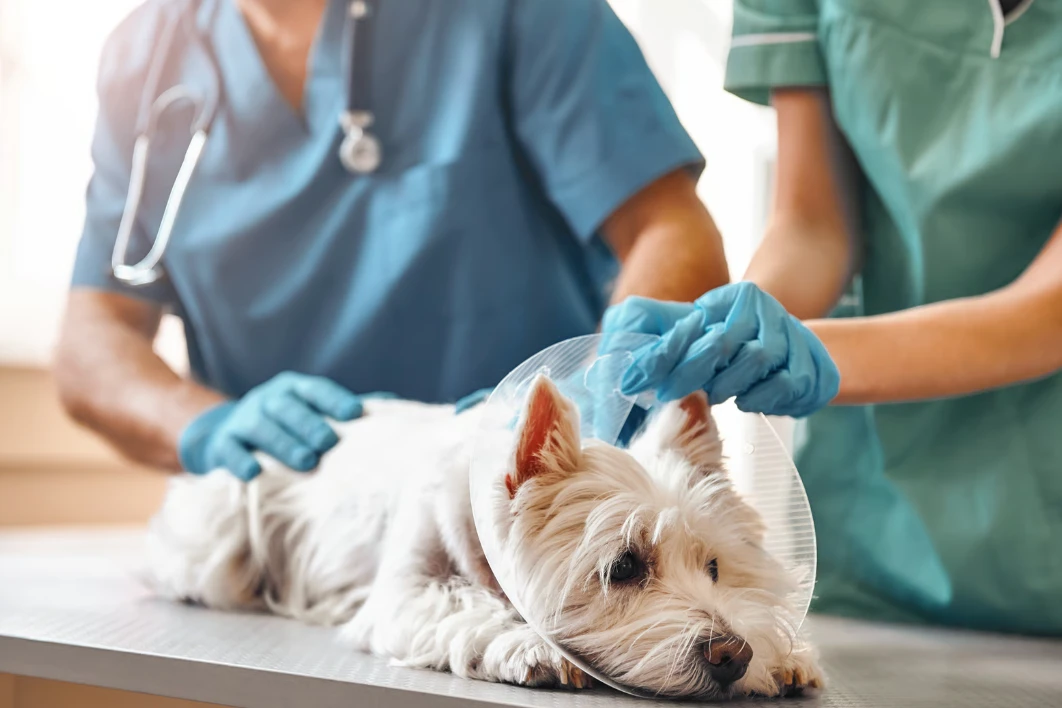
Dog vomiting and diarrhea causes range from a snack stolen from the garbage to infections, swallowed toys and illnesses that need a vet the same day. Most upset stomachs clear up in a day or two, but some don't. It can be hard to tell which one you're dealing with at two in the morning. If you're looking for a veterinarian near me in Oakville, Speers Road Animal Hospital can help you figure it out. This guide covers the common causes, the signs that mean a vet visit today, how a vet finds the cause, and how to lower your dog's risk.
What Are the Most Common Dog Vomiting and Diarrhea Causes?
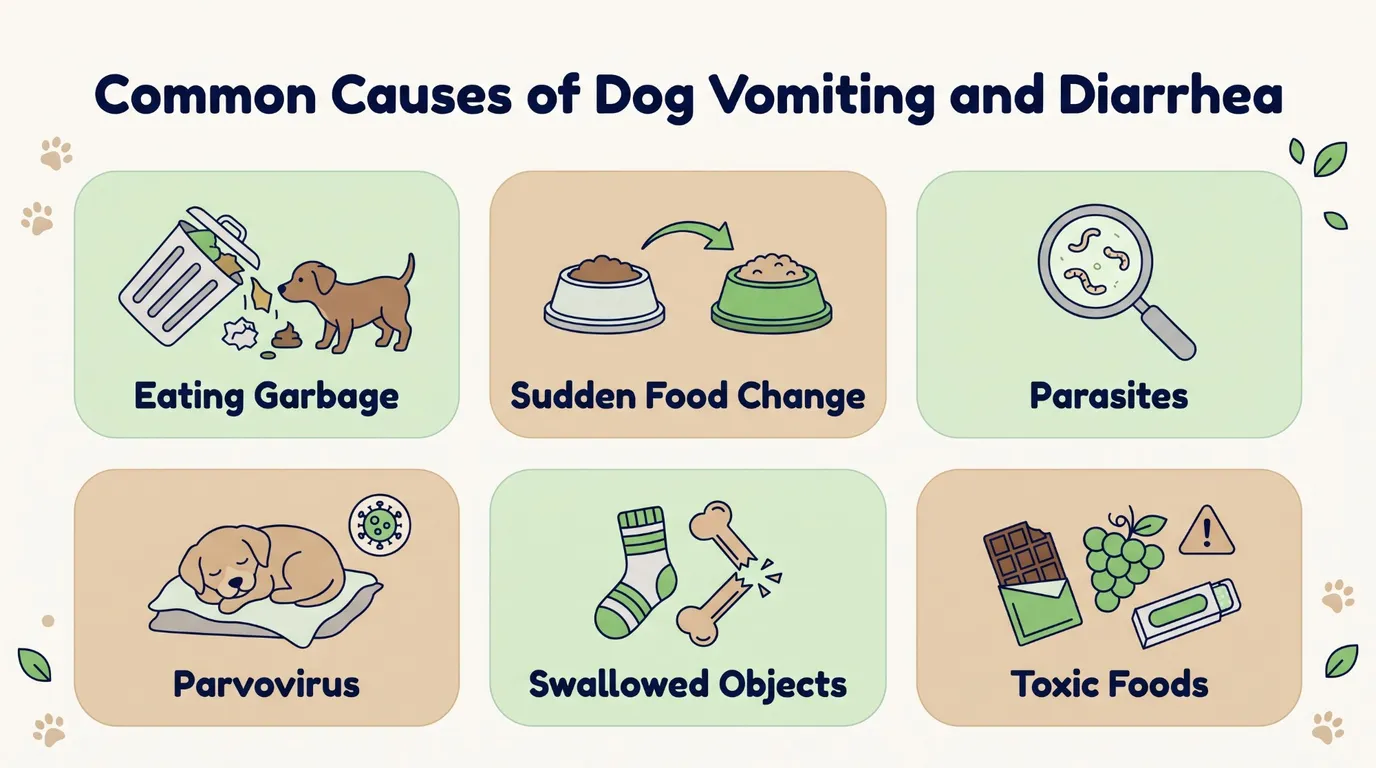
The most common dog vomiting and diarrhea causes are eating something they shouldn't, a sudden change in food, stress, intestinal parasites and infections like parvovirus. Less often, the cause is a swallowed object, a poison, pancreatitis or an illness somewhere else in the body. Cornell University's Riney Canine Health Center separates short-term causes like these from more serious ones, such as swallowed objects, toxins, pancreas problems and Addison's disease.
Vomiting and diarrhea often happen together because they come from the same digestive system. When the stomach and intestines get irritated, food can come back up, pass through too fast, or both. Seeing both at once doesn't always mean something serious. But your dog is losing fluid from both ends, so they can get dehydrated quickly, especially puppies and small dogs.
How to Tell Vomiting From Regurgitation
You can tell vomiting from regurgitation by how much effort your dog puts in. Vomiting is forceful, and your dog usually drools, licks their lips and heaves from the belly first. The Merck Veterinary Manual describes regurgitation as passive: the food comes back up with no heaving, often undigested and shaped like a tube. Regurgitation points to a problem in the food pipe (esophagus) rather than the stomach, so tell your vet which one you saw.
Small Bowel vs Large Bowel Diarrhea
Small bowel and large bowel diarrhea come from different parts of the intestines, and they usually look different. Small bowel diarrhea tends to be a large amount of watery stool. If it goes on for a while, your dog may lose weight. Large bowel diarrhea, often called colitis, usually means small amounts many times a day. Your dog may strain, rush to get outside, or pass mucus or streaks of fresh blood. Many dogs have a mix of both.
Everyday Causes: Diet, Stress and Medication
Everyday causes like diet, stress and medication usually lead to a short upset. It often clears up in a day or two once the trigger is gone, but call your vet if your dog isn't getting better.
Eating Something They Shouldn't
Eating something they shouldn't is one of the most common reasons dogs vomit or get diarrhea. Think garbage, compost, animal droppings at the park, fatty leftovers or a whole bag of treats. Vomiting, loose stool or both often start within a few hours. If what your dog ate could be poisonous or could get stuck, like a corn cob, a sock or a bone, call right away.
A Sudden Change in Food
A sudden change in food can upset your dog's stomach because their gut needs time to get used to new ingredients and fat levels. Switching brands overnight, or sharing turkey skin and gravy at a holiday dinner, can lead to loose stool and sometimes vomiting. Many vets suggest switching foods slowly over about a week. Food allergies and sensitivities can cause similar signs, but those tend to hang around or keep coming back.
Stress and Excitement
Stress and excitement can cause diarrhea in some dogs, often with mucus and a sudden need to go. Cornell lists stressful events like a vet visit or a stay at a boarding kennel among the common short-term causes. This kind of diarrhea usually clears up once life is back to normal. Call if it lasts more than a couple of days or you see blood.
Medication Side Effects
Medication side effects can cause vomiting or diarrhea, because some drugs irritate the stomach or upset the normal bacteria in the gut. Antibiotics and anti-inflammatory pain medicines are common examples. If the signs start after your dog begins a new medication, call your vet before giving the next dose.
Infections and Parasites That Cause Vomiting and Diarrhea
Infections and parasites cause vomiting and diarrhea by irritating or damaging the lining of the intestines, and some spread easily from dog to dog. Puppies, and dogs who aren't fully vaccinated or on parasite prevention, are most at risk.
Parvovirus in Puppies
Parvovirus is one of the most serious causes of vomiting and diarrhea in puppies. It's a very contagious virus that attacks the intestines. The American Veterinary Medical Association lists low energy, loss of appetite, vomiting and severe, often bloody diarrhea as its signs. Puppies between six and twenty weeks old, dogs who aren't fully vaccinated, and breeds like Rottweilers and German Shepherds are at higher risk. The virus spreads through sick dogs, their stool and things they've touched, like bowls and shoes. It can survive in the environment for a long time.
Parvo needs a vet right away, and severe cases often need several days in hospital on fluids. The best protection is the full set of puppy vaccines. Our guide to puppy and kitten care in Oakville walks through the vaccine visits at eight, twelve and sixteen weeks.
Intestinal Parasites and Giardia
Intestinal parasites and Giardia are common causes of diarrhea, and sometimes vomiting, in dogs of any age. Roundworms, hookworms and whipworms live in the intestines, while Giardia and coccidia are tiny single-celled parasites. Puppies often pick them up from their mother or where they were raised, and adult dogs from dirty soil, water or other animals' stool. Regular deworming and year-round parasite prevention, part of our preventive care for dogs, help keep them away.
Bacterial Infections and Raw Diets
Bacterial infections, including ones that come from raw food, can cause diarrhea that is sometimes bloody. Bacteria like Salmonella and Campylobacter can reach your dog through spoiled food, dirty water, other animals' stool or raw meat. The AVMA advises against feeding dogs raw or undercooked meat because of the risk to pets and to the people handling the food. If you feed a raw diet, tell your vet.
Serious Causes: Blockages, Poisons and Pancreatitis
Serious causes like blockages, poisons and pancreatitis rarely get better on their own and can become dangerous within hours. They often come with belly pain, weakness, repeated vomiting or blood.
Swallowed Objects and Blockages
Swallowed objects cause vomiting when they irritate the stomach or block the intestines so food can't get through. Socks, pieces of toys, corn cobs, fruit pits and bones are common culprits. A dog with a blockage may vomit again and again, even after drinking water, stop eating and seem sore or quiet. X-rays and other imaging can help find the object, and some objects have to be removed with surgery.
Toxic Foods and Human Medicines
Toxic foods and human medicines often cause vomiting as one of the first signs of poisoning. Common examples are chocolate, grapes and raisins, onions and garlic, xylitol (a sweetener in some sugar-free gum and peanut butter), and pain relievers like ibuprofen. Some of these, like grapes and xylitol, can do serious harm even if your dog seems fine at first. Call right away, bring the packaging, and don't try to make your dog throw up unless a vet tells you to.
Pancreatitis
Pancreatitis means the pancreas, the organ that helps digest food, is inflamed. It often causes vomiting, belly pain, loss of appetite and sometimes diarrhea. A rich or fatty meal, like table scraps or bacon grease, is often blamed, although many cases have no clear cause. Miniature Schnauzers are one of the breeds that get it more often. If your dog is vomiting and standing hunched over, they need to be seen the same day.
Sudden Bloody Diarrhea in Small Dogs (AHDS)
Sudden bloody diarrhea in small dogs is often caused by acute hemorrhagic diarrhea syndrome (AHDS), which used to be called hemorrhagic gastroenteritis. The Merck Veterinary Manual's overview of AHDS describes a large amount of bloody diarrhea that often looks like raspberry jam. It mostly affects small and toy breeds like Yorkshire Terriers, Miniature Schnauzers and Maltese. Dogs can lose fluid fast, so quick treatment with IV fluids matters, and with the right treatment most dogs recover well.
Sudden vs Ongoing Vomiting and Diarrhea: How They Compare
Sudden (acute) and ongoing (chronic) vomiting and diarrhea differ mostly in how long they last and what usually causes them. Sudden cases start quickly and often last a few days at most. Ongoing cases last for weeks or keep coming back, and they usually mean there's a deeper problem that needs testing.
Long-Term Causes to Know About
Long-term causes to know about include food allergies or sensitivities, parasites that keep coming back, and inflammatory bowel disease (a gut lining that stays irritated). Illnesses outside the digestive system can also be the cause. Kidney disease, liver disease, Addison's disease (a hormone problem) and some cancers can all show up first as an upset stomach that never quite settles. Weight loss, changes in thirst or appetite, or signs that keep coming back are good reasons to book an exam.
The table below shows how sudden and ongoing vomiting and diarrhea usually compare.
| What to Compare | Sudden (Acute) | Ongoing (Chronic) |
|---|---|---|
| How long it lasts | Starts suddenly, often clears up in a few days | Lasts for weeks or keeps coming back |
| Common causes | Garbage, a quick food switch, stress, infections, parasites, toxins, swallowed objects | Food allergies, inflammatory bowel disease, parasites, kidney, liver or hormone problems |
| Signs to watch for | Repeated vomiting, blood, weakness, belly pain | Weight loss, poor appetite, drinking more or less than usual |
| Tests your vet may suggest | Exam, stool test, bloodwork, X-rays if a blockage is possible | Bloodwork, urine and stool tests, imaging, sometimes a food trial |
| When to call | The same day if it keeps happening, there's blood or your dog seems weak | Book an exam soon, even if your dog seems well |
When Vomiting and Diarrhea Mean Your Dog Needs a Vet Today
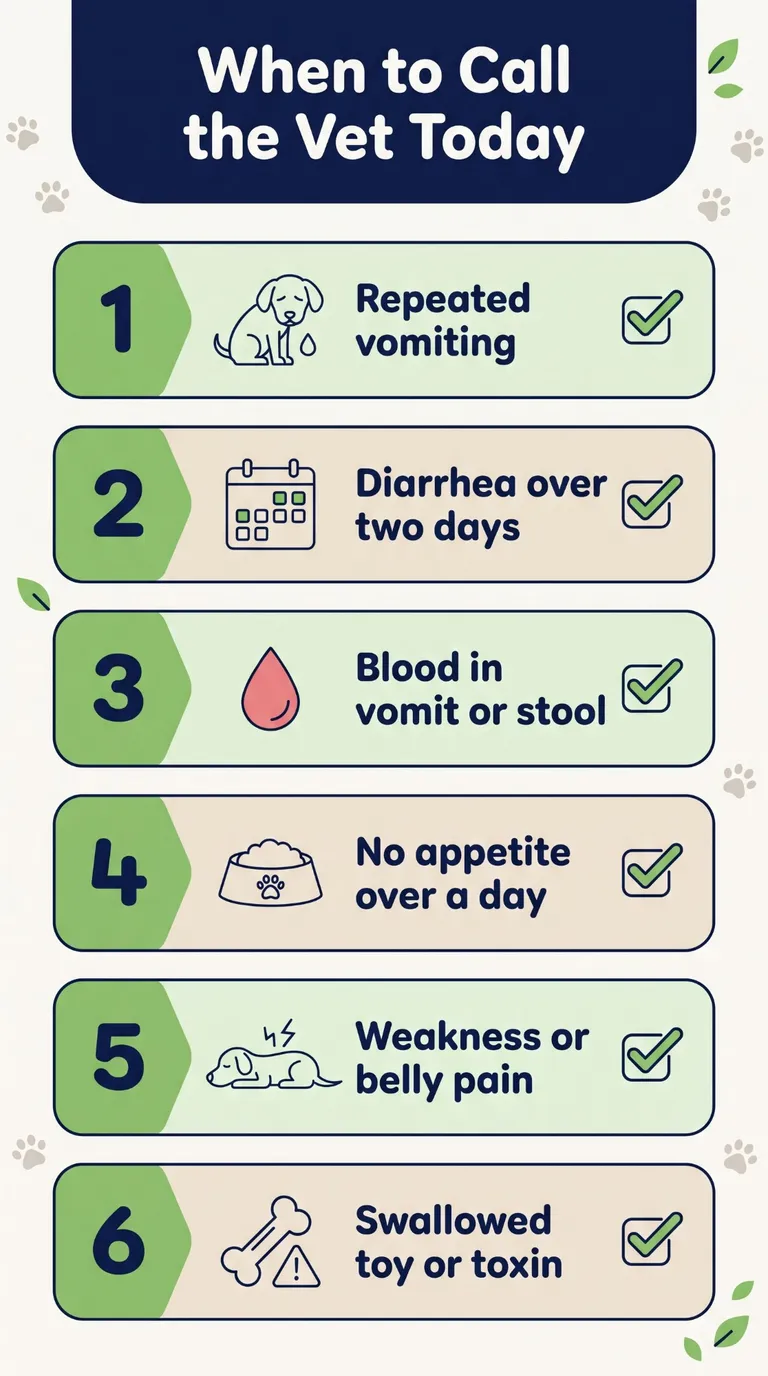
Vomiting and diarrhea mean your dog needs a vet today when they keep happening, there's blood, or your dog also seems tired, sore or won't eat. Cornell advises calling the vet if loose stool lasts more than two days. Call us for a same-day visit if you notice any of these:
- Vomiting more than once or twice in a day, or vomiting that keeps coming back
- Diarrhea that lasts more than two days, or black, tarry or bloody stool
- Blood in the vomit, or vomit that looks like coffee grounds
- Vomiting and diarrhea together in a puppy, an older dog or a small breed
- Weakness, low energy, or not eating for more than a day
- A sore belly, or a dog who stands hunched over and can't get comfortable
- Any chance your dog swallowed a toy, bone, medication or toxic food
When to Go Straight to an Emergency Hospital
Go straight to a 24-hour emergency hospital if your dog collapses, has pale or grey gums, or has heavy bloody diarrhea and is getting weaker. Go right away, too, if your dog keeps trying to vomit but nothing comes up and their belly is swelling. In a large, deep-chested dog, that can be bloat, which is life-threatening. Poisoning with shaking or seizures, or any serious problem while we're closed, also means the emergency hospital. The nearest 24-hour hospital is Mississauga Oakville Veterinary Emergency & Specialty Hospital, 2285 Bristol Circle, Oakville, ON L6H 6P8, (905) 829-9444.
Why Puppies, Small Dogs and Seniors Need Help Sooner
Puppies, small dogs and seniors need help sooner because they have less in reserve to handle losing fluids and missing meals. A small puppy who vomits and stops eating can get weak fast, and a puppy who isn't fully vaccinated could have parvovirus. Older dogs are more likely to have another illness behind the upset. For these dogs, call the same day instead of waiting it out.
What to Do Before Your Visit
Before your visit, keep a close eye on your dog, take notes and don't try to treat it at home. Write down when the vomiting or diarrhea started, how often it's happened, what it looks like and what your dog last ate. A photo of the vomit or stool helps. Bring a fresh stool sample and the packaging of anything your dog ate.
Cornell advises against giving human medicines like Pepto-Bismol or Imodium unless your vet recommends them. Ask your vet before holding back food, switching to a bland diet or limiting water. The right approach depends on the cause and your dog's health. Our pet urgent care guide explains how to get a sick dog to the clinic safely.
How We Find the Cause at Speers Road Animal Hospital
We find the cause of vomiting and diarrhea by starting with your dog's history and a full exam, then choosing tests based on what we find. Dr. Abdul R. Alashraf will ask about your dog's food, recent changes, anything they might have eaten, medications and vaccines. Then he checks hydration, gum colour, temperature and the belly. He explains what he found and what each next step would cost before anything is done. Our exam and consultation page lists the sick-visit exam and current fees.
If tests are needed, several can be done right here. We run bloodwork in our own clinic, so results are often ready to go over with you during the visit. Bloodwork and laboratory testing can show dehydration, infection and how the kidneys and liver are working. X-rays and ultrasound help look for swallowed objects and changes in the organs. Board-certified radiologists review our X-rays, and a visiting internal medicine specialist does ultrasounds here. Your vet may also ask for a stool sample to check for parasites.
Treatment Depends on the Cause
Treatment depends on the cause and how sick your dog is. Many dogs with a simple upset go home with medicine to settle the stomach and an easy-to-digest diet for a few days. A blockage may need surgery. Dogs who need to be watched overnight or need intensive care are referred to a 24-hour hospital, since we don't offer overnight care.
How to Lower Your Dog's Risk of Vomiting and Diarrhea
You can lower your dog's risk of vomiting and diarrhea by controlling what they can get into, staying up to date on prevention and changing foods slowly. Not every upset can be prevented, but many common causes can:
- Keep garbage, compost and food scraps behind closed lids
- Keep chocolate, grapes, raisins, onions, garlic and anything with xylitol out of reach
- Switch foods slowly over about a week, not overnight
- Choose chew toys too big to swallow, and throw away broken pieces
- Keep vaccines up to date, including the full puppy series against parvovirus
- Stay on regular deworming and parasite prevention, and pick up after your dog
- Only give medicines your vet recommends, and keep human medicines locked away
Getting Help for Dog Vomiting and Diarrhea in Oakville
To get help for dog vomiting and diarrhea in Oakville, call (905) 845-0300 and tell us what's happening. If you searched for a vet near me because your dog is sick right now, we offer same-day urgent care in Oakville during open hours. We'll tell you how soon to come in. Speers Road Animal Hospital is at Unit 35, 530 Speers Road, Oakville, ON L6K 2G3 and is open 7 days a week, 9 AM–8 PM (Wednesday 12 PM–4 PM).
For problems that aren't urgent, like soft stool that comes and goes, you can book an appointment online. Many dog vomiting and diarrhea causes are easier to treat when they're caught early, so it's better to ask than to wait. When we're closed, go to Mississauga Oakville Veterinary Emergency & Specialty Hospital, then call us when we reopen so we can follow up.
Frequently Asked Questions
What are the most common dog vomiting and diarrhea causes?
The most common dog vomiting and diarrhea causes are eating something they shouldn't, a sudden change in food, stress, intestinal parasites and infections like parvovirus. These usually cause a short upset that clears up in a day or two. Less common but more serious causes include swallowed objects, toxic foods, pancreatitis, and kidney, liver or hormone problems. If the signs keep happening, include blood or your dog seems tired and weak, call your vet the same day.
Should I be worried if my dog is vomiting and has diarrhea at the same time?
Vomiting and diarrhea at the same time need a closer eye than either one alone, because your dog is losing fluid from both ends. An adult dog who vomits once, has one loose stool and is otherwise bright, eating and drinking can often be watched for a few hours. Call the same day if it keeps happening, you see blood or your dog seems weak. If your dog is a puppy, a senior or a small breed, call the same day either way.
How long does diarrhea from an upset stomach usually last in dogs?
Diarrhea from a simple upset stomach often clears up in a day or two once the cause is gone. Cornell's Riney Canine Health Center advises calling the vet if loose stool lasts more than two days. Call sooner if your dog is also vomiting, stops eating, or passes black or bloody stool. Diarrhea that comes and goes over several weeks is a different problem, and it usually needs tests to find the cause.
Can stress cause vomiting and diarrhea in dogs?
Yes, stress can cause diarrhea in some dogs, and sometimes vomiting. Boarding, a vet visit, moving house, fireworks or a new pet are common triggers. The diarrhea often comes with mucus and a sudden need to go. It usually clears up once your dog's routine is back to normal. Stress diarrhea looks a lot like other problems. Call your vet if it lasts more than a couple of days, has blood in it or comes with other signs.
Can I give my dog Pepto-Bismol or Imodium for diarrhea?
No, don't give Pepto-Bismol, Imodium or any other human medicine unless your vet tells you to. Cornell's Riney Canine Health Center advises against these products without a vet's advice. Some dogs also react differently to certain drugs. For example, some herding breeds like Collies carry a gene change that can make Imodium dangerous for them. Call your vet instead so your dog gets treatment that's safe for them.
Why does my puppy have vomiting and diarrhea?
Puppies most often get vomiting and diarrhea from intestinal parasites, eating things they shouldn't, a change in food after coming home, or infections like parvovirus. Puppies have less in reserve, so they can get dehydrated and weak faster than adult dogs. A puppy who hasn't finished their vaccines and has vomiting, bloody diarrhea or low energy should be seen the same day. A puppy who is getting weaker needs an emergency hospital.
What will the vet do to find the cause of my dog's vomiting and diarrhea?
The vet will start by asking about your dog's food, recent changes, anything they may have eaten, medications and vaccines. Then they'll do a full physical exam. Depending on what they find, they may suggest a stool test for parasites or bloodwork to check hydration and organ health. X-rays or ultrasound can look for a blockage. At Speers Road Animal Hospital, Dr. Abdul explains each step and what it costs before anything is done.
Knowing the common dog vomiting and diarrhea causes helps you tell a quick upset from a problem that needs help today, and our Oakville team is just a phone call away when you're not sure.
Speers Road Animal Hospital, Unit 35, 530 Speers Road, Oakville, ON L6K 2G3, (905) 845-0300.