
In this article

Puppy and kitten care in the first six months shapes your pet's health for years, and most of it happens in the weeks right after you bring them home. At Speers Road Animal Hospital, your veterinarian near me in Oakville, we see new puppies and kittens from eight weeks of age and walk families through every step of that first season. This guide covers what puppy and kitten care includes, what happens at the first visit, the vaccine schedule for each species, parasite prevention, socialization, spay and neuter timing, the warning signs that need a vet the same day, and how our Healthy Start at Speers Road Program brings it all together.
What Does Puppy and Kitten Care Include?
Puppy and kitten care is the preventive veterinary care a young pet needs from about eight weeks to six months of age: a series of exams, core vaccines, deworming and parasite prevention, guidance on feeding and behaviour, and a plan for spaying or neutering. It is built around a short, busy window. A young animal's protection from its mother's antibodies fades over the first few months, its immune system is still learning, and its brain is most open to new experiences. Care in this period is timed to match those changes.
In practice, that means three or four visits spaced a few weeks apart, each one combining a full physical exam with the vaccines and preventive treatments due at that age. The exam matters as much as the needle. At each visit the veterinarian checks the heart, lungs, eyes, ears, mouth, skin, coat, belly, joints and weight, which is how problems such as a heart murmur, an umbilical hernia, ear mites or a retained baby tooth are picked up early, when they are usually simpler to manage.
What Puppy and Kitten Care Doesn't Cover
Routine puppy and kitten care is preventive, so it does not replace a sick visit. If your puppy has diarrhea with blood in it, or your kitten stops eating, that needs its own appointment the same day, not a wait until the next vaccine visit. Spay and neuter surgery is also planned separately, after the vaccine series. Think of the vaccine visits as the backbone of care, with sick visits and surgery added when they are needed.
Your Puppy or Kitten's First Vet Visit: What to Expect
Your puppy or kitten's first vet visit is a full nose-to-tail exam plus a conversation about the months ahead, and at Speers Road Animal Hospital it usually happens at about eight weeks of age. Plan for it within the first few days of bringing your new pet home, even if the breeder or shelter has already given a first vaccine, because a new home, new food and new stresses are exactly when small problems tend to show up.
Here is what usually happens, step by step. We weigh your pet and ask about their history: where they came from, what they have been eating, any vaccines or dewormers already given, and how they have been settling in. Dr. Abdul R. Alashraf, who leads our team, then examines your pet on a padded table, often with treats and plenty of breaks for nervous kittens. After the exam, we talk through the vaccines due that day, parasite prevention, feeding and house training or litter habits, and we give the first vaccine. Most first visits take around thirty to forty-five minutes, and you leave knowing when the next visit is due.
Bringing a Pet Who Started Vaccines Elsewhere
Many Oakville families adopt from breeders, rescues or shelters that have already started the vaccine series. That is fine. Bring every record you have, including stickers or labels from vaccines and the name of any dewormer given. We fit your pet into the schedule from where they are, so vaccines are not repeated without reason and nothing important is missed.
The Puppy and Kitten Care Checklist for the First Six Months
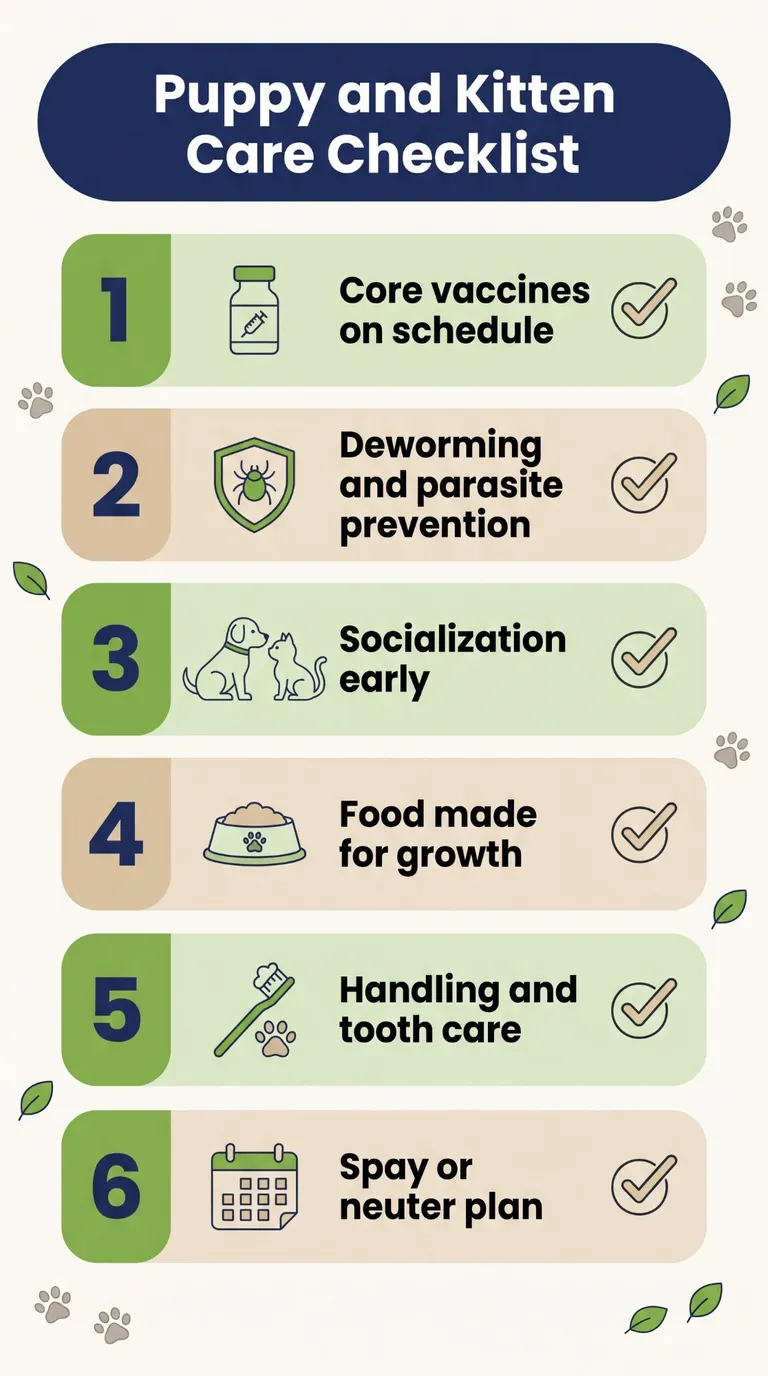
The puppy and kitten care checklist below covers the six areas that matter most between eight weeks and six months of age. Some items happen at the clinic, and some happen at home every day, but each one supports the others.
1. Core Vaccines on Schedule
Core vaccines are the vaccines every puppy or kitten needs, whatever their lifestyle, because the diseases they prevent are common, serious or both. For puppies, that means DAPP (distemper, adenovirus, parainfluenza and parvovirus), leptospirosis and rabies. For kittens, it means FVRCP (feline herpesvirus, calicivirus and panleukopenia) and rabies. The American Animal Hospital Association's vaccination guidelines recommend a series of doses every few weeks with the final puppy and kitten doses at about sixteen weeks or older, because maternal antibodies can block a vaccine given too early.
Rabies is also a legal requirement here. Ontario's rabies immunization regulation, under the Health Protection and Promotion Act, requires every cat, dog and ferret three months of age or older to be vaccinated against rabies, and that includes indoor cats.
2. Deworming and Parasite Prevention
Deworming is a standard part of puppy and kitten care because many young animals are born with roundworms or pick them up from their mother's milk. The Canadian Parasitology Expert Panel guidelines, which Canadian veterinarians use, recommend that a newly acquired puppy or kitten receive a series of dewormings a couple of weeks apart and then regular treatment until six months of age, with stool checks during the first year. Your veterinarian will adjust that plan to your pet's history and risk.
Fleas and ticks matter in Oakville too. Halton Region Public Health considers all of Halton an established risk area for blacklegged ticks, which carry Lyme disease, so a puppy who walks in parks, ravines or long grass will usually need tick protection through the warmer months.
3. Socialization in the Right Window
Socialization means gently introducing your young pet to the people, animals, sounds, surfaces and handling they will meet as adults, and the timing is time-sensitive. The American Veterinary Society of Animal Behavior's position statement on puppy socialization says puppies can start classes as early as seven to eight weeks, once they have had at least one set of vaccines a week before the first class and their first deworming. The society points out that behaviour problems, not infectious disease, are the leading cause of death in dogs under three years old.
Kittens have an even earlier window, which feline guidelines place at roughly two to seven weeks of age, so much of it has passed before adoption. Keep building on it at home with short, positive sessions: handling paws and ears, short carrier practice with treats, and calm introductions to visitors.
4. Growth Nutrition and a Healthy Weight
Young pets need a diet formulated for growth, because their needs for calories, protein and minerals differ from an adult's. Large-breed puppies are a special case, since growing too fast can strain their joints, so ask us which food suits your breed. We weigh your pet at every visit and help you adjust portions as they grow, which is easier than correcting extra weight later.
5. Handling, Teeth and Grooming Habits
The habits you build now make adult care far easier. Gently touching your pet's mouth, paws and ears every day prepares them for nail trims, ear checks and toothbrushing. Puppies and kittens lose their baby teeth by about six months, and a baby tooth that doesn't fall out can push the adult tooth out of line, so we check the mouth at every visit. Our dental care team can help when problems appear later.
6. A Spay or Neuter Plan
A spay or neuter plan is the last major step of puppy and kitten care, and the right timing depends on species, breed, size and lifestyle. Rather than giving one age for every pet, we discuss it at a spay/neuter consult at about six months, the final visit of the series. The surgery itself is booked afterwards through our surgical care service, where prices for cat and dog spay and neuter are listed.
Puppy Vaccines vs Kitten Vaccines: How They Compare
Puppy vaccines and kitten vaccines follow a similar rhythm, with visits at about eight, twelve and sixteen weeks and a final visit near six months, but the diseases they target are different. The table below shows how the two schedules generally compare at Speers Road Animal Hospital.
| What to compare | Puppies | Kittens |
|---|---|---|
| First visit | About 8 weeks, exam and first DAPP | About 8 weeks, exam and first FVRCP |
| Core vaccines | DAPP, leptospirosis, rabies | FVRCP, rabies |
| Optional but recommended | Lyme (two doses), Bordetella for dogs who visit groomers, boarding or social areas | FeLV (two doses), with an FIV/FeLV test first |
| 16-week visit | DAPP/leptospirosis and rabies | FVRCP/rabies |
| Final visit, about 6 months | Exam and spay/neuter consult | Exam, FVRCP booster and spay/neuter consult |
| Main lifestyle question | Parks, ticks, daycare and boarding | Indoor or outdoor access, other cats at home |
The Healthy Start at Speers Road Program
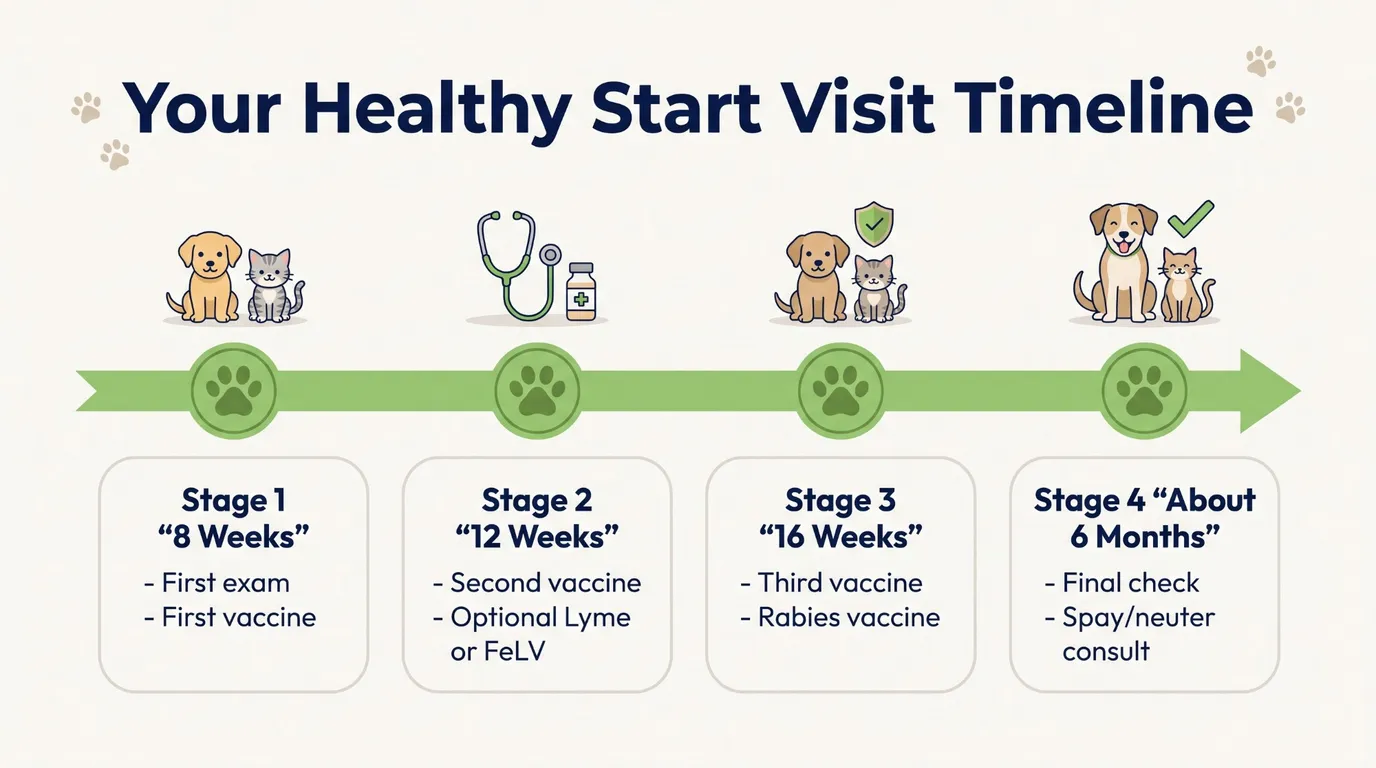
The Healthy Start at Speers Road Program is our puppy and kitten care plan: a set schedule of exams, vaccines and parasite prevention from eight weeks to about six months, with a reduced exam fee at each routine vaccine visit after the first. We built it so families know what each visit includes and what it costs before they arrive, and so their pet sees the same veterinarian, Dr. Abdul, at every visit.
The schedule follows established veterinary guidelines and is adjusted to your pet's age, medical history and lifestyle. The first visit includes a $99 examination fee, and each routine vaccine visit after that carries a reduced $79 exam fee. On the recommended schedule, the four puppy visits total $488 and the four kitten visits total $482, plus applicable taxes. Optional extras such as Lyme and Bordetella for puppies, FeLV and the FIV/FeLV test for kittens, and deworming with flea and tick prevention (typically $30 to $50 per visit, by weight) are added only if you choose them.
Who the Program Suits
The program suits any puppy or kitten starting their vaccines, including pets who began their series at another clinic. In that case the first visit with us carries the $99 exam fee and later routine visits the reduced fee. You can see each visit's price, and add the optional extras, in the planner on the Healthy Start at Speers Road Program page.
What Happens After Six Months
At the final visit we review how your pet has grown, give any last vaccines due, and plan the spay or neuter. From there, your pet moves into regular adult preventive care, with a yearly exam, boosters and parasite prevention matched to their lifestyle.
Signs Your Puppy or Kitten Needs a Vet Today
Your puppy or kitten needs a vet the same day if they seem unwell, because young animals have small reserves and can become dehydrated or weak much faster than adults. Call us right away if you notice any of the following:
- Vomiting or diarrhea more than once, or any blood in the stool
- Not eating for more than a day, or a kitten who skips several meals
- Unusual sleepiness, weakness or a puppy who won't play
- Coughing, sneezing with thick discharge, or laboured breathing
- Swelling, hives or vomiting within a few hours of a vaccine
- Straining to urinate, or crying in the litter box
- Swallowing a toy, string, sock or anything toxic
Parvovirus is a particular worry in puppies who have not finished their vaccine series, and it usually starts with vomiting, diarrhea and lethargy. If you need a same-day vet near me in Oakville, we offer same-day visits during open hours. If your pet collapses, has trouble breathing, has a seizure, or it is after hours, go straight to the nearest 24-hour emergency hospital, Mississauga Oakville Veterinary Emergency & Specialty Hospital at 2285 Bristol Circle, (905) 829-9444. Our guide to pet urgent care explains how to tell the two apart.
What to Bring and Questions to Ask at the First Visit
What to bring to the first visit is simple: anything that tells us your pet's history, plus your list of questions. Arriving prepared makes the visit faster and helps us avoid repeating vaccines or treatments already given.
- Any vaccine and deworming records from the breeder, rescue or shelter
- A fresh stool sample if you have one, in a sealed bag
- The name and brand of the food your pet is eating now
- A secure carrier for kittens and small puppies, or a leash and collar
- Treats your pet already likes, to make the exam a good experience
- Your questions about house training, litter habits, biting or scratching
- Your pet's lifestyle plans: daycare, boarding, cottage trips, outdoor access
If you are thinking about pet insurance, the first weeks are a good time to look into it, before any condition is on record. Our payment options page sets out the ways you can pay for your pet's care.
Booking Puppy and Kitten Care in Oakville
Booking puppy and kitten care in Oakville at Speers Road Animal Hospital is simple: call or text (905) 845-0300, or use our book an appointment page. Ideally, book the first visit for around eight weeks of age, or within a few days of bringing your new pet home if they are older. Mention that you would like to join the Healthy Start at Speers Road Program, and we will set up the full visit schedule with you.
We are at Unit 35, 530 Speers Road in Oakville, and we are open 9 AM to 8 PM every day except Wednesday, when we are open 12 PM to 4 PM. If you are searching for a puppy and kitten vet near me in Oakville, Kerr Village, Bronte or Glen Abbey, we would be glad to meet your new family member and answer your questions before the first appointment.
Frequently Asked Questions
When should puppy and kitten care start?
Puppy and kitten care should start at about eight weeks of age, which is when we see most puppies and kittens for their first exam and vaccine. If your pet comes home older than that, book a visit within the first few days. They return at about twelve and sixteen weeks for the next vaccines, then at about six months for a final check and a spay/neuter consult. Bring any records you have so we can fit your pet into the schedule.
How much does puppy and kitten care cost at Speers Road Animal Hospital?
On our Healthy Start at Speers Road Program, the four recommended puppy visits total $488 and the four kitten visits total $482, plus applicable taxes. The first visit has a $99 exam fee and later routine vaccine visits a reduced $79 exam fee. Optional extras, such as Lyme, Bordetella, FeLV, the FIV/FeLV test and parasite prevention, are added only if you choose them. Spay and neuter surgery is priced separately.
Does my indoor kitten need vaccines?
Yes, an indoor kitten still needs core vaccines, and Ontario law requires rabies vaccination for cats three months of age and older, indoor or not. Viruses such as panleukopenia can be carried in on shoes and clothing, and indoor cats sometimes slip outside or meet new cats. FVRCP and rabies are the core kitten vaccines. FeLV is optional but recommended, especially for kittens who may go outdoors or live with other cats.
Can my puppy go outside before finishing vaccines?
Your puppy can go outside before finishing vaccines, but choose places carefully until the series is complete. Your own yard and the homes of friends with healthy, vaccinated dogs are lower-risk choices. Avoid dog parks, pet store floors and areas where unknown dogs gather, because parvovirus can survive in the environment. Well-run puppy classes that require vaccine records are usually a good option after the first vaccines.
How often should a puppy or kitten be dewormed?
A puppy or kitten is usually dewormed several times in the first months, often every couple of weeks at first and then regularly until about six months, following Canadian Parasitology Expert Panel guidelines. The exact plan depends on your pet's age, history and lifestyle. At Speers Road Animal Hospital, deworming with flea and tick prevention is typically $30 to $50 per visit, depending on weight, and we tailor it at each visit.
When should I spay or neuter my puppy or kitten?
The right time to spay or neuter your puppy or kitten depends on species, breed, expected adult size and lifestyle, so there is no single age that suits every pet. We discuss the timing with you at a spay/neuter consult at about six months, which is the last visit of our Healthy Start program. The surgery is booked after that conversation, once we have checked your pet's weight and health.
Are vaccine reactions common in puppies and kittens?
Serious vaccine reactions are uncommon in puppies and kittens, and most pets are just a little sleepy or sore for a day. Call us if your pet vomits, develops facial swelling or hives, or seems very weak within a few hours of a vaccine. If your pet has trouble breathing or collapses, go straight to the nearest emergency hospital. Tell us about any past reaction so we can plan future visits.
A healthy start is not about getting everything perfect, it is about giving your puppy or kitten the right care at the right time, so the years ahead are easier for both of you.
Speers Road Animal Hospital, Unit 35, 530 Speers Road, Oakville, ON L6K 2G3, (905) 845-0300.